Bail Agents Step Up to Protect Families: Sounding the Alarm on Sophisticated Jail Scams and Sharing Proven Ways to Stay Safe
All over the country, people are becoming the victims of sophisticated jail scams. In usual fashion, when there is something negatively impacting or threatening the jurisdiction's criminal justice system, the first ones to speak up and warn the public are licensed bail bondsmen.
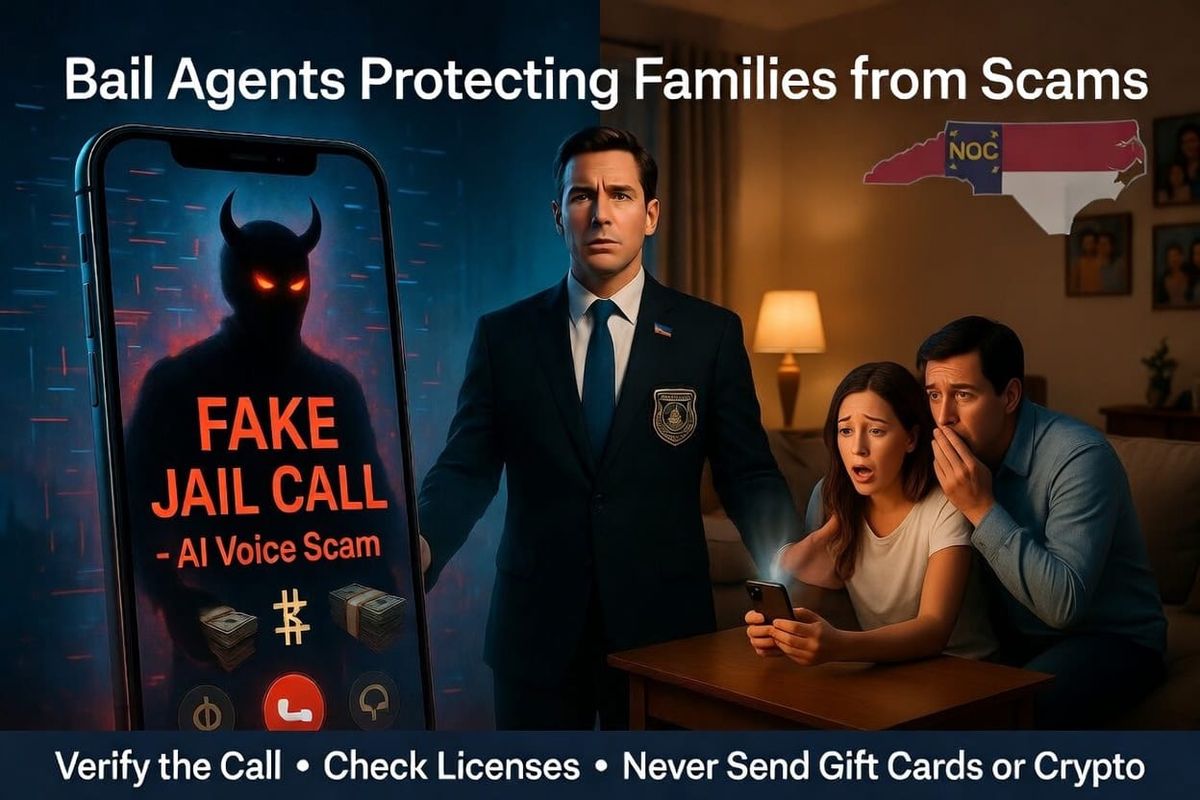
All over the country, people are becoming the victims of sophisticated jail scams. In usual fashion, when there is something negatively impacting or threatening the jurisdiction's criminal justice system, the first ones to speak up and warn the public are licensed bail bondsmen. The most recent example comes out of North Carolina where the state’s licensed bail agents are taking a strong, proactive stand against fraudsters who prey on families during their most stressful moments.
In a recent article in the Richmond County Daily Journal with President of the North Carolina Bail Agents Association, Julie Henderson, talks about the role bail agents are playing in issuing public warnings, practical consumer education and shining a light on a rising wave of scams involving fake jail emergencies. Rather than waiting for more victims, bail agents are stepping forward to equip people around the country with the exact tools they need to spot red flags, verify legitimacy, and avoid losing hard-earned money to sophisticated criminals.
Scammers have grown bolder and smarter. Some now use artificial intelligence to clone a loved one’s voice from just a few seconds of social-media audio. Others rely on old-fashioned deception: impersonating bail agents in person right outside real bail-bond offices, spoofing phone numbers, or creating urgency with claims that a son, daughter, or spouse is behind bars. The goal is always the same—trigger panic, demand immediate payment through untraceable methods like Cash App, Venmo, gift cards, or cryptocurrency, and disappear before anyone can check the facts.
“Families are already overwhelmed when a loved one faces arrest,” notes Ms. Henderson. “Scammers know this and exploit it. That’s why we’re stepping up now to make sure legitimate help is easy to recognize and fake demands are easy to shut down.”
Why these scams are so effective—and how bail agents are fighting back
Traditional trust signals—familiar voices, office locations, or caller-ID numbers—can now be faked. AI-generated voices sound eerily real. Scammers can stand outside actual bail-bond offices or reference real local details to appear credible. The pressure tactic is relentless: “Act now or your loved one stays in jail.”
Because bail agents understand these tactics from the front lines, they are using their platform to teach families exactly how to push back.
Practical steps bail agents recommend to avoid becoming a victim
- Verify independently—every single time.
If someone claims a relative is in jail, hang up and call the jail or law enforcement agency directly using a number you look up yourself. Do not use any contact information provided by the caller or visitor. - Check the bail agent’s license before handing over a dime.
States like North Carolina makes it simple. Visit the North Carolina Judicial Branch website and use the official “Find a Bail Bondsman” tool:
https://www.nccourts.gov/services/find-a-bail-bondsman
For other states, visit the state Department of Insurance website and check their list of licensed bail bondsmen. Only licensed professionals appear on this list. If the person you’re dealing with isn’t there, walk away. - Never trust appearances alone.
A familiar voice, an office address, or even someone standing outside a real bail-bond location does not guarantee legitimacy. Bail agents stress: legitimate professionals do not pressure families into instant, untraceable payments. - Watch for urgent, unusual payment demands.
Requests for Cash App, Venmo, gift cards, or crypto are classic scam signals. Licensed bail agents use secure, documented payment methods and never rush families into irreversible transfers. - Confirm actual bond conditions.
If the caller mentions an ankle monitor or electronic monitoring, call the jail to verify. Scammers often invent extra requirements to extract more money. - Create a family “verification plan” in advance.
Agree on a safe word, a secret question only family members would know, or a rule that no money moves without a second trusted confirmation. Bail agents say this one habit has saved countless families. - Limit personal information online.
The less scammers can learn from social media, the harder it is for them to build a believable story.
What to do if you’ve already been targeted or scammed
Bail agents urge immediate action:
- File a report with your local police or sheriff’s office.
- Submit a complaint to your state's Department of Justice
- Contact the state's Department of Insurance (which regulates bail agents)
Reporting helps authorities track patterns and protects other families—something the bail industry actively supports.
Bail agents’ message to families
As the president of the North Carolina Bail Agents Association, Julie Henderson, emphasized in the Richmond County Daily Journal, the bail system exists to help families through difficult times—not to add to their burden. By speaking out, verifying licenses, and teaching simple verification habits, licensed bail professionals are turning awareness into real protection.
In an era when technology makes deception easier than ever, bail agents across the country are refusing to stay silent. They are stepping up, educating consumers, and reminding everyone that a few extra minutes of verification can prevent thousands of dollars in losses—and keep scammers from winning.
Families facing a legal emergency should never feel alone. Reach out to a verified, licensed bail agent through official channels, slow down, and verify. That simple act of caution—championed by the very professionals who know the system best—is the strongest defense against today’s scams.