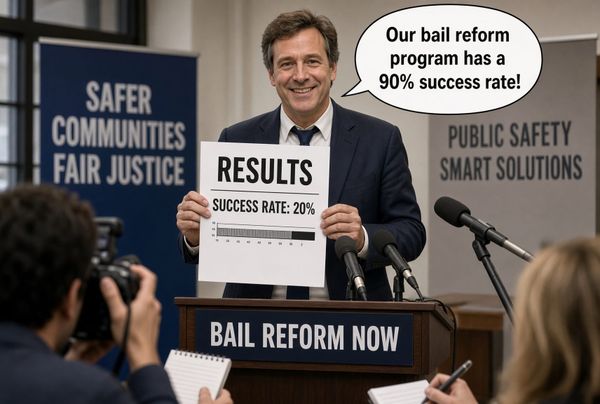
Hawaii Bail Reform Bill Faces Sharp Criticism
A recent opinion column in the Honolulu Star-Advertiser by John Deutzman strongly opposes Hawaii’s latest bail reform legislation, House Bill 2413, warning that the measure goes too far in reshaping Hawaii's pretrial release practices
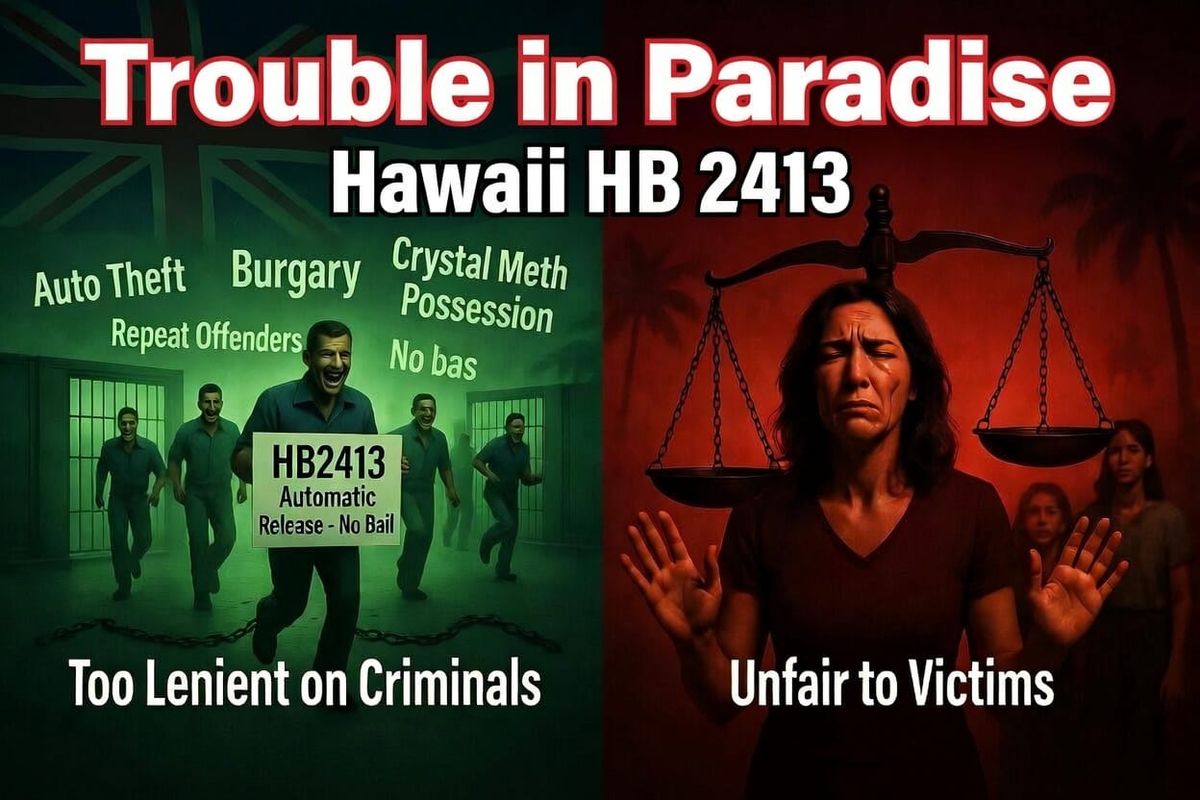
A recent opinion column in the Honolulu Star-Advertiser by John Deutzman strongly opposes Hawaii’s latest bail reform legislation, House Bill 2413, warning that the measure goes too far in reshaping Hawaii's pretrial release practices. The bill would require judges to release most defendants arrested for non-violent class C felonies, misdemeanors, and petty misdemeanors on their own recognizance—effectively eliminating the need for bail bonds in the majority of lower-level cases. Offenses that would trigger automatic release include auto theft, second-degree burglary, theft up to $19,999, crystal methamphetamine possession, harassment, shoplifting, and trespassing, regardless of a defendant’s prior criminal record or history of failing to appear in court.
The author argues that bail reform in Hawaii is unnecessary and risks undermining public safety by stripping judges of meaningful discretion. Instead of allowing courts to evaluate each defendant’s individual circumstances, the legislation lets politicians dictate pretrial release based solely on the type of crime. A two-year study of Waikiki arrests cited in the piece found that 73% of misdemeanor defendants released without bail bonds failed to appear, generating warrants and forcing police to track them down at significant cost. The column also highlights a recent case in which a career criminal with 77 convictions and dozens of warrants was released on a non-violent felony and immediately reoffended by attacking a police officer.
Critics, including the State Attorney General, prosecutors, police, and the police union, contend the bill repeats the mistakes of a similar proposal vetoed in 2022. The piece concludes that Hawaii’s current system already offers compassionate pretrial release options through diversion programs and judicial flexibility, and further weakening bail bonds requirements would only reward repeat offenders while burdening law enforcement and victims. A link to the article is below as well as the full text.
Bail reform bill too lenient, meddles with judicial discretion
By John Deutzman
The criminal justice warriors have hoodwinked politicians again. Even though Hawaii is among the most compassionate states in the country, out-of-state lobbyists and local advocates are pushing for bail reform (House Bill 2413) even though a similar bill caused outrage and was vetoed by Gov. David Ige in 2022.
The new bill had lukewarm success in the House, passing 31 to 20 with 18 Democrats voting no. It’s still alive in the Senate despite objections from the State Attorney General, Prosecutors, Police, and the police union. The bill requires judges to release almost everyone arrested in Hawaii on their own recognizance, without bail. Those who commit non-violent class C felonies, non-violent misdemeanors, and petty misdemeanors would be cut loose despite their criminal records and history of failing to appear in court. Here are some of the common felonies committed that would mandate release: Auto theft, breaking into cars, burglary in the second degree, habitual property crime, theft up to $19,999, and crystal meth possession. Almost all misdemeanors and petty misdemeanors would require release, including harassment, shoplifting, disorderly conduct, and trespassing.
The implication that Hawaii has a cruel approach to pre-trial detention is nonsense. It’s an insult to police, prosecutors, and judges who are beyond fair. In fact, the system can be too nice to chronic criminals. Last fall, a judge released a career criminal on a non-violent class C felony, crystal meth possession. The guy had 77 convictions, was involved in 399 criminal cases, and racked up dozens of warrants for failure to appear in court and was a registered sex offender. Right after he was released, he attacked and bit a cop, and now he’s safely behind bars awaiting trial.
The most absurd part of HB 2413 is that it meddles with a judge’s discretion, which already allows release without bail if the judge believes the person will return to court. Instead of a judge making a decision based on a defendant’s history, politicians are deciding that people should be released solely on the types of crimes they commit. Holding people just for violent crimes ignores the fact that almost all crimes can be dangerous. For example, I’ve been a victim of several harassments in which the defendants were in my face, screaming expletives and threatening to kill me. Harassment is considered a “non-violent” petty misdemeanor, but it sure felt dangerous, and there was nothing “petty” about it.
Lawmakers are on the brink of approving a landmark law without any local research on what happens to those released without bail. In my two-year study of Waikiki arrests, 73% of misdemeanor defendants released failed to appear in court, and all of those cases resulted in warrants. That means police have to hunt down the defendants during a police shortage, and HPD research shows an average arrest costs $1,900. Most frightening is that after my two-year study, dozens of defendants beat the system and still had warrants.
Reformists have already made a huge impact. OCCC is no longer overcrowded. Eight years ago, it had a frightening average of 245 inmates over capacity. Last week, the jail had 55 vacancies. The median misdemeanor sentence is two days. The cases are resolved in court, and the defendant doesn’t go to jail. The two-day sentence includes the day at the police station and the day in court. We have programs like jail diversion, mental health court, drug court, and community court, all aimed at helping impoverished defendants get better. Pushing for bail reform is like throwing a punch after the bell.
Instead of meddling with judicial discretion and having politicians decide what crimes are worthy of release, judges should have the discretion to release a defendant based on the nature and circumstances of each case and the history and characteristics of each defendant.
ISLAND VOICES
Link to article https://www.staradvertiser.com/2026/04/06/editorial/island-voices/column-bail-reform-bill-too-lenient-meddles-with-judicial-discretion/