H.R. 6260 - Unravelling the Failings of the Bail Reform Movement at the National Level
On May 14, 2026, the U.S. House of Representatives passed H.R. 6260, the Keeping Violent Offenders Off Our Streets Act, along party lines as part of a broader Republican-led package targeting cashless bail policies and charitable bail organizations.
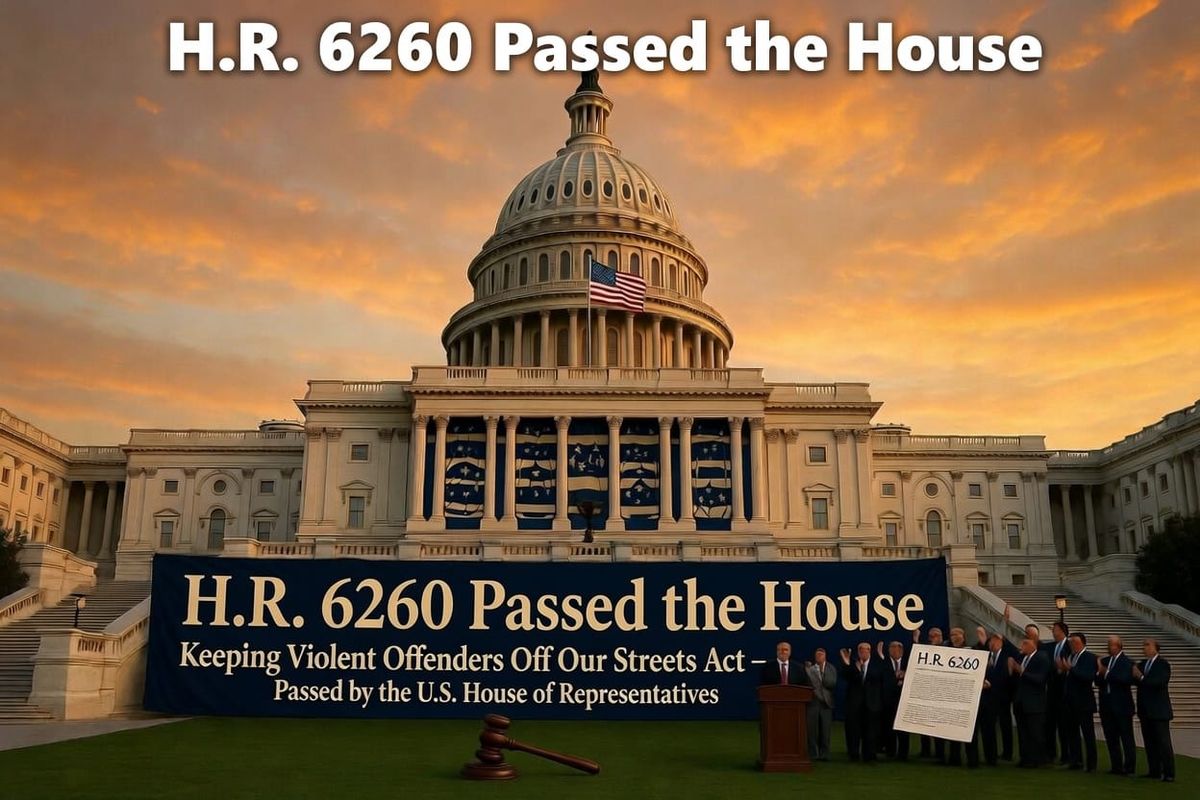
On May 14, 2026, the U.S. House of Representatives passed H.R. 6260, the Keeping Violent Offenders Off Our Streets Act, along party lines as part of a broader Republican-led package targeting cashless bail policies and charitable bail organizations. The bill reclassifies bail bonds posted by nonprofits as insurance products, subjecting them to federal fraud laws, and explicitly authorizes states to impose licensing and regulatory requirements on any nonprofit or charitable entity that posts bail for criminal defendants.
Proponents, led by sponsor Rep. Scott Fitzgerald (R-WI), argue the legislation closes dangerous loopholes that have allowed groups like The Bail Project and the Minnesota Freedom Fund to use donor funds to secure the release of violent repeat offenders. They cite real-world data, including a CNN investigation showing that 24% of roughly 1,000 defendants released by The Bail Project in Indiana between 2019–2021 were later charged with a new violent crime, and 35% faced felony charges with prior violent records. The bill was packaged with the Cashless Bail Reporting Act and other tough-on-crime measures, framing it as essential public safety legislation. Democrats called it “messaging” legislation that does nothing to help law enforcement and accused it of undermining the presumption of innocence.
Benefits This Law Will Bring to the Criminal Justice System
H.R. 6260 represents a meaningful step toward restoring accountability, public safety, and integrity in the pretrial release process. By empowering states to regulate nonprofit bail funds and treating bail posting as a regulated insurance activity, the law delivers several concrete benefits:
- Stronger Public Safety and Reduced Recidivism: The bill directly targets the practice of mass-releasing dangerous defendants. Charitable bail organizations have repeatedly posted bonds for individuals with serious criminal histories, only for those same people to re-offend. By subjecting these groups to licensing and fraud scrutiny, states can screen out organizations that routinely release high risk, repeat violent offenders, keeping more dangerous individuals behind bars until trial rather than cycling them back onto the streets.
- Greater Accountability and Transparency: Reclassifying nonprofit bail bonds as insurance products brings them under established federal fraud statutes. This forces organizations to operate with the same oversight and financial responsibility required of commercial surety companies, something many charitable funds have avoided for years.
- Restoration of Judicial and Law-Enforcement Discretion: The legislation supports traditional, vetted bail practices rather than unchecked, ideologically driven releases. It complements other measures in the Republican package that tie federal funding to tougher pretrial policies, ensuring jurisdictions cannot game the system with cashless bail while still expecting federal dollars.
How the Law Prevents Charitable Bail Organizations from Defrauding Donors and Releasing Criminals
One of the most important, and under-reported aspects of H.R. 6260 is how it protects both public safety and the donors who contribute to these organizations in good faith. Many charitable bail funds solicit donations by promising to help low-level, non-violent individuals avoid pretrial detention due to poverty. In reality, data shows a significant portion of their activity has involved posting bail for serious and repeat offenders.
The new law closes this loophole in two key ways:
- Fraud Protections for Donors: By classifying bail bonds as insurance products, the bill makes it illegal for nonprofits to misrepresent the risks or the nature of the defendants they are releasing. Organizations that use donor money to systematically free violent criminals while marketing themselves as “poverty relief” groups can now face federal fraud investigations and penalties. Donors will finally have real accountability instead of unknowingly funding the early release of dangerous people.
- State Licensing Requirements: States will be able to require background checks, financial audits, and operational standards for any nonprofit posting bail. This prevents fly-by-night or ideologically extreme groups from operating without oversight, directly reducing the number of violent or repeat offenders who are released back into communities using tax-deductible charitable dollars.
In short, H.R. 6260 ends the era in which charitable status served as a shield for practices that endangered communities and misled generous donors. It brings much-needed honesty and responsibility to pretrial release, ensuring that bail decisions prioritize public safety over political activism while protecting the integrity of legitimate charitable work. If enacted, this law will make the criminal justice system fairer, safer, and more accountable for everyone involved.