Minnesota Freedom Fund Pushes “Equity” Agenda and Proposes Constitutional Amendment to Eliminate Cash Bail in Minnesota
Earlier this week, a proposal to amend Minnesota’s constitution was heard by legislators. This proposal, supported and endorsed by the Minnesota Freedom Fund...
Why is Minnesota considering ineffective criminal justice policies that eliminate accountability and make our communities less safe?
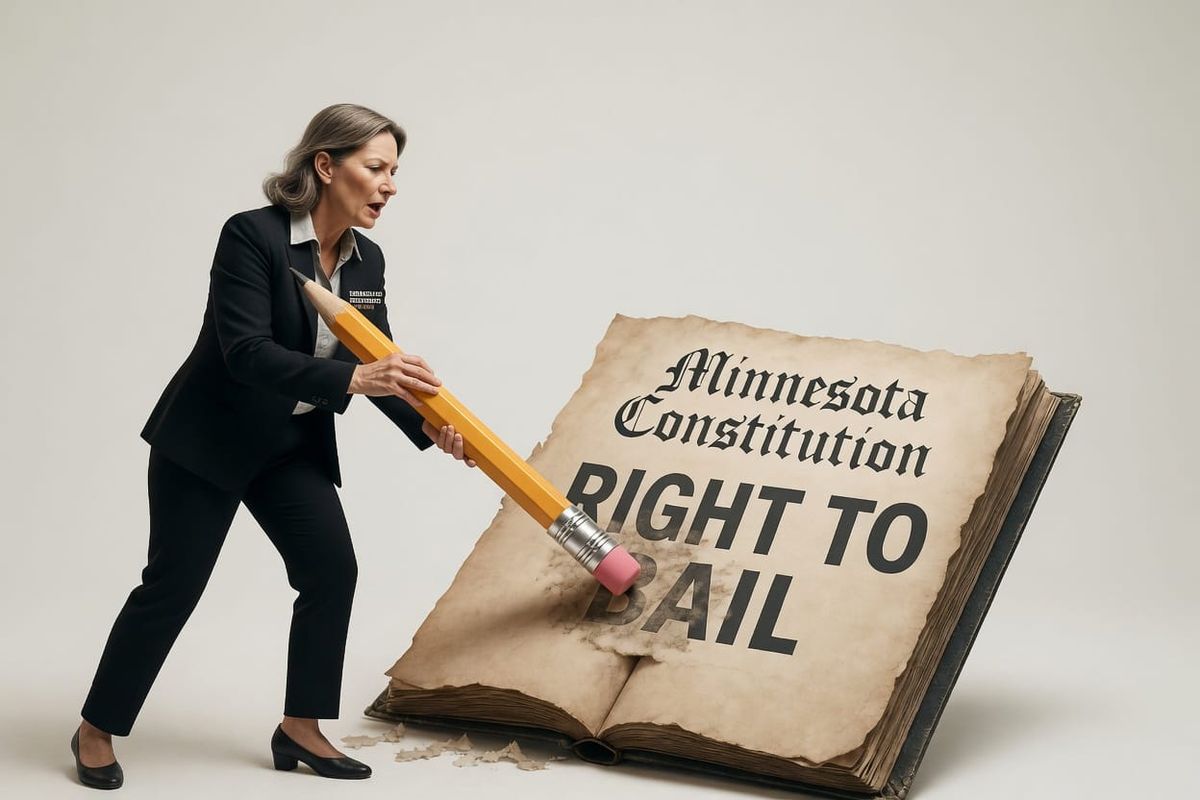
Earlier this week, a proposal to amend Minnesota’s constitution was heard by legislators. This proposal, supported and endorsed by the Minnesota Freedom Fund, would eliminate the use of “cash bail” in the criminal justice system and replace it with a purely “risk-based” pretrial release system. The proposal is being sold as a solution to racial disparities in the jail population. Advocates claim Black Minnesotans are disproportionately held pretrial because they cannot afford bail. This so called “unaffordable bail” argument has been used multiple times by bail reform advocates. While emotional and impactful, this narrative is completely false. Why? Because it misses a fundamental truth: people are not arrested because they are poor. They are arrested because they have been accused of committing a crime. Additionally, there are a number of reasons that people are held in jail that have nothing to do with race and poverty. These reasons include everything from probation violations to multiple charges on previous cases to outstanding warrants to awaiting a transfer to another jail, and so on. These reasons are of course absent from the proposal, and the blame is put on cash bail.
What bail reform proponents don’t understand is that “cash” bail is not a punishment for poverty — it is a tool to ensure defendants appear in court and to protect the public from those who pose a danger. Removing it does not address the underlying reasons why certain communities have higher arrest rates. It simply removes one of the few remaining accountability mechanisms we have.
The Real-World Failures of Cashless Bail
States and cities that have tried eliminating or severely restricting cash bail have seen predictable and dangerous results. New York’s 2019 bail reform law, California’s “zero bail” policies, and similar experiments have repeatedly shown:
- Sharp increases in re-arrest rates, especially among repeat offenders. High-risk defendants released pretrial without financial consequences are far more likely to commit new crimes while their cases are pending. Almost every state that has implemented these types of cashless bail policies has had to deal with repeat offenders. The removal of accountability from the system spurs an environment of criminal empowerment and lawlessness.
- Skyrocketing failure-to-appear rates. Without meaningful financial stakes, many defendants simply stop showing up for court. After Harris County, Texas’ bail reform efforts, FTAs across all of the criminal courts averaged close to 80%. That is 8 out of every 10 defendants failed to show up for court.
- A revolving door for serious offenders. Career criminals and those accused of violent crimes are released back into the community with little or no supervision, endangering victims and law-abiding residents. This also creates an environment of witness intimidation as was seen in Philadelphia after their implementation of a 10% to the court policy.
The idea that cash bail is the primary driver of racial disparities ignores the data on crime rates and repeat offending. It also pretends that judges and prosecutors are arbitrarily setting higher bail amounts based on race rather than on the seriousness of the charges, criminal history, and flight risk — factors that are supposed to guide those decisions.
Surety Bail Agents Provide the Real Solution for Those Who Can’t Afford Full Cash Bail
Critics of cash bail often ignore a critical safety valve that already exists...surety bail (bail bonds). Licensed bail agents across Minnesota and the rest of the country specialize in helping defendants who cannot pay the full bail amount upfront. They typically require only a 10% non-refundable premium and often offer flexible payment plans. This allows people to secure their release while still maintaining financial accountability — if they fail to appear, the bail agent and the court have strong incentives to bring them back in.
Eliminating cash bail doesn’t help the poor; it removes the very mechanism that allows working-class defendants to get out of jail without paying the full amount. It replaces a system with private incentives (bail agents who lose money if defendants flee) with a government-run “risk assessment” bureaucracy that has no financial skin in the game.
Public Safety Must Come First
Pretrial detention is not supposed to be comfortable or convenient. It is supposed to protect the public and ensure justice is served. When we prioritize “equity” metrics over individual behavior and risk, we create exactly the two-tiered system advocates claim to oppose — one in which certain offenders get multiple chances while law-abiding citizens bear the cost in higher crime, victim trauma, and eroded trust in the justice system.
Minnesota legislators should reject this latest attempt to eliminate cash bail. The data from jurisdictions that have tried it is clear: removing financial accountability does not make the system fairer. It makes it weaker, less safe, and ultimately less just for everyone — especially the very communities these reforms claim to help.
Below is an excerpt from an article on the proposed policy on the Minnesota Legislature website as well as a link to the full article.
Proposed pretrial release changes, prohibition of cash bail could be decided by Minnesota voters
When voters go to the polls in just over six months, the state’s constitutional offices will be on the ballot. So will all 201 legislative seats and maybe some county, city and school board positions.
Folks casting ballots on Nov. 3 might also fill in a circle related to the judiciary.
Heard on an informational basis Tuesday by the House Rules and Legislative Administration Committee, a yet-to-be-introduced bill would ask voters: "Shall the Minnesota Constitution be amended to prohibit monetary bail and provide for universal pretrial release for alleged criminal offenses that are nonviolent, not dangerous, or do not pose a serious risk of harm to a person or the judicial process?” READ THE FULL ARTICLE HERE>>>