The Bail Project’s Own Data Undermines Its Taxpayer-Savings Claim
In a recent Tax Day op-ed, The Bail Project argues that America wastes $14 billion in taxpayer dollars every year detaining legally innocent people in local jails simply because they cannot afford cash bail.
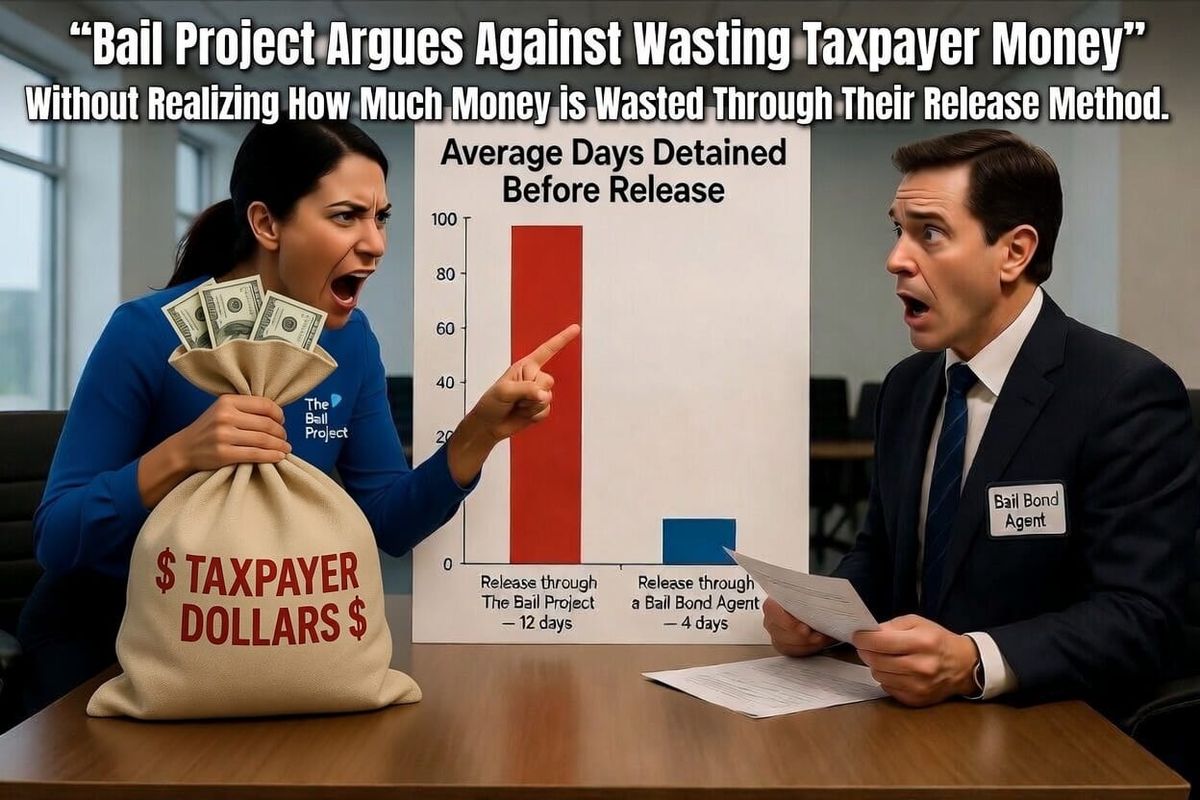
In a recent Tax Day op-ed, The Bail Project argues that America wastes $14 billion in taxpayer dollars every year detaining legally innocent people in local jails simply because they cannot afford a bail bond. While we would normally criticize The Bail Project’s claims that innocent people are languishing away in jail simply because they can’t afford a bail bond, we thought we would take a different approach on this article. Instead of taking the position that The Bail Project’s argument is flawed and getting into the economics of jails and how most costs are fixed or getting into the details of the actual reasons people sit in jail before bailing out, we will just give them the benefit of the doubt and say yes, jails are expensive and everyday someone stays in jail, taxpayer dollars are being wasted.
So, if we start there and now look at The Bail Project’s article as truthful, you might be amazed to see what happens. First, as usual, they paint the traditional cash-bail system as inefficient, unjust, and expensive, while positioning their own charitable bail-fund model as the smarter, more cost-effective alternative. They claim to have prevented 1.4 million days of incarceration and saved taxpayers more than $109 million by posting free bail for 35,000+ people. At first glance, this data is very compelling, and we have to be honest, almost convincing. The problem however is that The Bail Project’s own research tells a very different story about whose method actually keeps people behind bars longer—and costs taxpayers more.
Their Own Tulsa Study: 12 Days vs. 4 Days
In June 2025, The Bail Project released “The False Promise of Bail,” a detailed analysis of 3,320 pretrial cases in Tulsa County, Oklahoma. The report breaks down average days detained by release method. The numbers are stark and come directly from the organization’s own data:
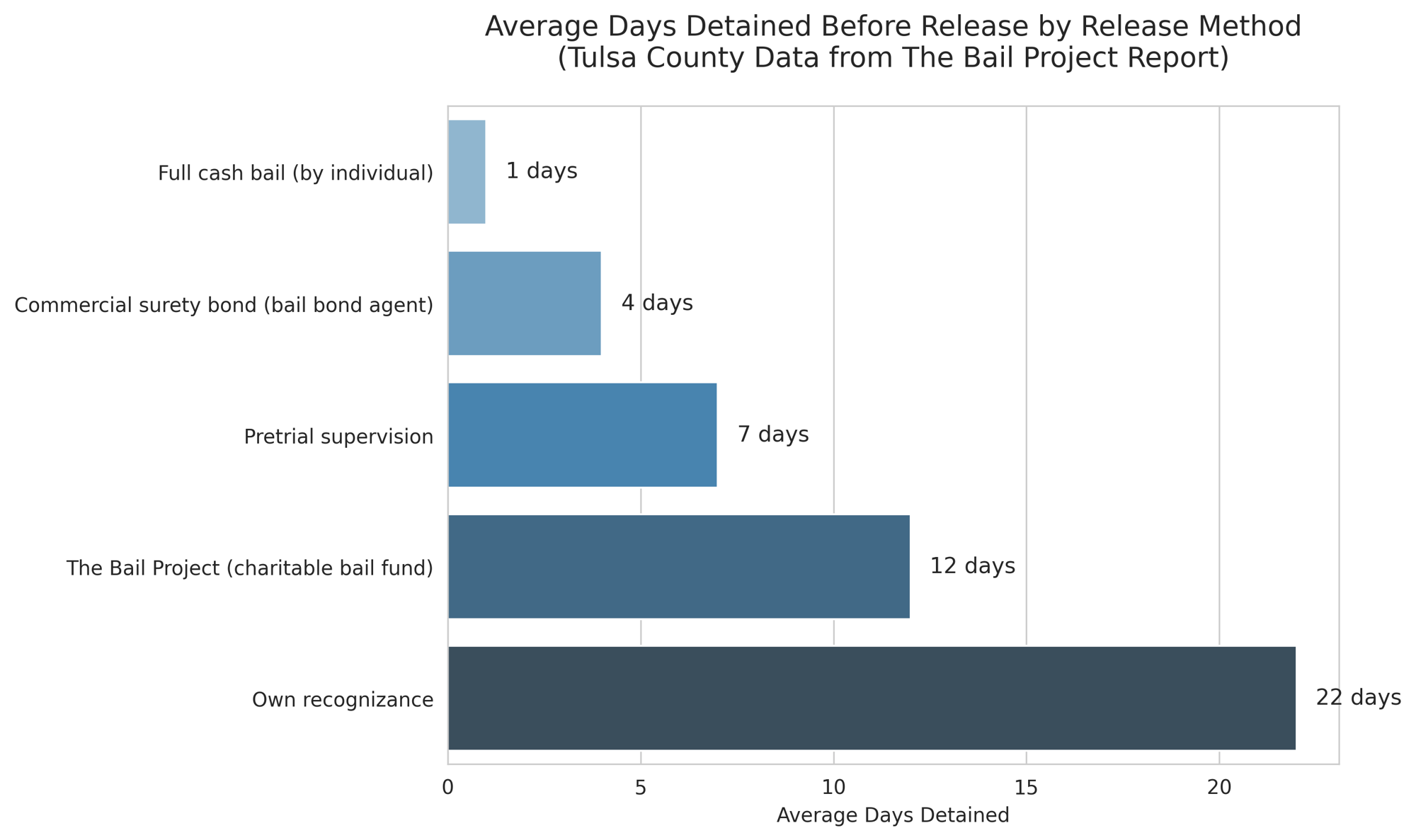
Defendants released through The Bail Project spent three times longer in jail on average than those released on a traditional surety bond posted by a licensed bail bond agent.
That’s an extra 8 days per person at taxpayer expense. And it is 12x longer than someone who just posts full cash to the court. Other than release one one’s own recognizance, release through a charitable bail fund is the least efficient model for release and according to The Bail Projects own data, the biggest waste of taxpayer dollars.
The Math Doesn’t Lie—More Detention Means More Cost
Using Tulsa County’s approximate daily jail cost of roughly $78 per day (a conservative figure consistent with national pretrial incarceration estimates), the difference is clear:
- Surety bond client: ~4 days × $78 = $312 in taxpayer-funded jail costs
- The Bail Project client: ~12 days × $78 = $936 in taxpayer-funded jail costs
Per person, The Bail Project’s approach costs taxpayers roughly three times more in pretrial detention alone. Scale that across the 117 people they bailed out in the Tulsa study sample, and the extra jail-bed days add up to over $70,000 in additional local taxpayer costs just for that one-year cohort—costs that would have been avoided if those same individuals had used a commercial surety bond.
Why the Delay?
Commercial bail bond agents operate with strong financial incentives: they are on the hook for the full bond amount if the defendant fails to appear. That creates urgency to process paperwork quickly, coordinate with the jail and court, and get their client released fast. Charitable bail funds like The Bail Project, while well-intentioned, rely on internal processing, donor-funded approvals, and administrative steps that simply take longer in practice.
The Bail Project’s Tulsa report acknowledges that “wealth buys freedom faster,” but it frames that as a flaw of the cash-bail system rather than a feature of professional surety operations. The data shows the opposite: when speed of release is measured, the for-profit surety system outperforms the nonprofit charitable model in getting people out of jail quickly.
The Irony of “Saving” Taxpayer Dollars
The Bail Project’s Tax Day article correctly notes that every unnecessary day in jail costs taxpayers’ money and harms defendants’ lives. Yet their own flagship study demonstrates that the very people they help spend more days in those costly jail cells than people who use the traditional surety-bond system they criticize.
If the goal is truly to minimize taxpayer spending on pretrial detention, the faster-release mechanism, commercial surety bonds, appears more efficient on this key metric.
The organization is right that pretrial incarceration is expensive. Its own numbers from Tulsa simply show that the charitable bail-fund solution isn’t the automatic taxpayer win they claim it to be. In fact, according to their own research, it keeps more people locked up longer, exactly the outcome they say wastes public dollars.
Perhaps the real question isn’t whether cash bail is broken, but whether The Bail Project’s model is the most efficient way to fix it. Their Tulsa data suggests that, on the narrow but critical measure of days behind bars, the much-maligned surety-bond industry is getting people home faster—and saving taxpayers more in the process.