Why California Needs Bail: Secured Release Is Essential for Victim Safety and Justice
In her recent article, "Why California Needs Bail," bail industry veteran Susan Shapiro, discusses the ongoing question of cashless bail vs. secured release.

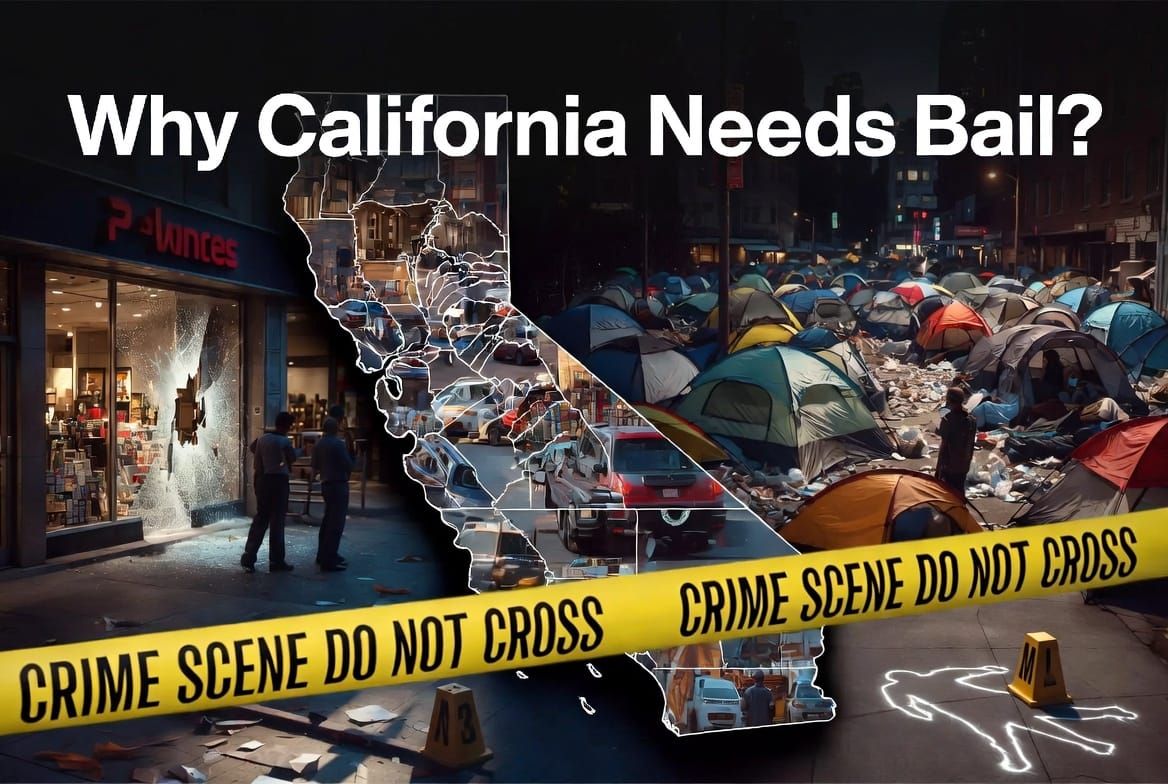
In her recent article, "Why California Needs Bail," bail industry veteran Susan Shapiro, discusses the ongoing question of cashless bail vs. secured release. This debate is often framed as a matter of legal reform, but for the victims of crime, it is a matter of immediate safety and the integrity of justice. Shapiro goes on to mention, that when the justice system removes the "financial anchor" of secured release and the oversight of the private sector through aggressive bail reform, it fundamentally shifts the burden of risk from the accused back onto victims and the community.
The Erosion of Accountability Under Cashless Bail
The strength of the traditional secured release system lies in contractual accountability. When a defendant or their family provides collateral through a financially secured surety bond, they establish real “skin in the game.” This creates a powerful circle of third-party pressure — involving family members, the bail agent, and the surety — that strongly encourages the defendant to appear in court and comply with stay-away orders and other conditions. In contrast, cashless bail and many bail reform initiatives eliminate this tangible incentive. The system then relies almost entirely on the defendant’s “good faith” or overburdened pretrial services agencies that frequently lack the resources for effective 24/7 monitoring. Without meaningful consequences, failure-to-appear rates rise and public safety suffers.
The Dangerous Gap in Victim Protection
For victims of domestic violence, stalking, assault, and other serious personal crimes, the period immediately following an arrest is often the most dangerous. Secured release provides a critical “safety window,” allowing judges time to properly weigh the specific risks of the case before releasing the defendant. Many cashless bail systems, however, depend on algorithmic risk assessments that can overlook the personal volatility and history unique to each situation. The result is often the immediate release of defendants — sometimes before the victim has even finished filing a police report or obtained a protective order. This leaves victims exposed to intimidation, retaliation, and re-victimization during the time they are most vulnerable.
The Pursuit of Long-Term Justice
Justice is not only about the arrest; it is about resolution. Under cashless bail and aggressive bail reform, when a defendant fails to appear, they often become just another name in an overwhelmed warrant database where law enforcement has limited resources to pursue them. In a secured release system, the private bail industry has both the legal authority and strong financial motivation to locate and return fugitives to court — at no additional cost to taxpayers. This ensures cases actually move forward and victims are not left in years of painful legal limbo.
A Call for Balance in Bail Reform
Protecting the constitutional rights of the accused should never require abandoning the rights of victims. By removing the private sector’s role through cashless bail and bail reform, society replaces a proven high-stakes accountability model with a bureaucratic one that too often fails those it claims to protect. A truly just system must prioritize safety over volume and ensure that defendants who pose a genuine risk to the public are held to a meaningful standard of accountability that only secured release can reliably provide.
As the article powerfully states, “Iron sharpens iron.” The justice system is only as strong as the accountability we demand from it. Turning a blind eye to the proven benefits of secured release in favor of cashless bail doesn’t just reform the system — it weakens it, leaving the most vulnerable among us to pay the heaviest price. Below is an excerpt from the article as well as a link to the full article.
Why California Needs Bail!
The debate over cashless bail is often framed as a matter of legal reform, but for the victims of crime, it is a matter of immediate safety and the integrity of justice. When the justice system removes the "financial anchor" of secured bail and the oversight of the private sector, it fundamentally shifts the burden of risk from the accused back onto the victim and the community. READ THE FULL ARTICLE HERE>>>