The Death of Judicial Discretion
After months of waiting and preparation, the bail profession got their opportunity yesterday to argue their case against several proposed court rule changes...


After months of waiting and preparation, the bail profession got their opportunity yesterday to argue their case against several proposed court rule changes in front of the Washington Supreme Court. I was fortunate to attend. The hearing lasted about three hours and consisted of 70 minutes of proponents arguing for the rule changes, 70 minutes of opponents arguing against the rule changes and 10 minutes of proponents’ rebuttal. As I sat through the presentations and questions from the bench, one thing became clear: this debate was not about fixing a broken pretrial system. It was about a group of soft on crime advocates forcing their preferred pretrial process and mechanisms into court rules.
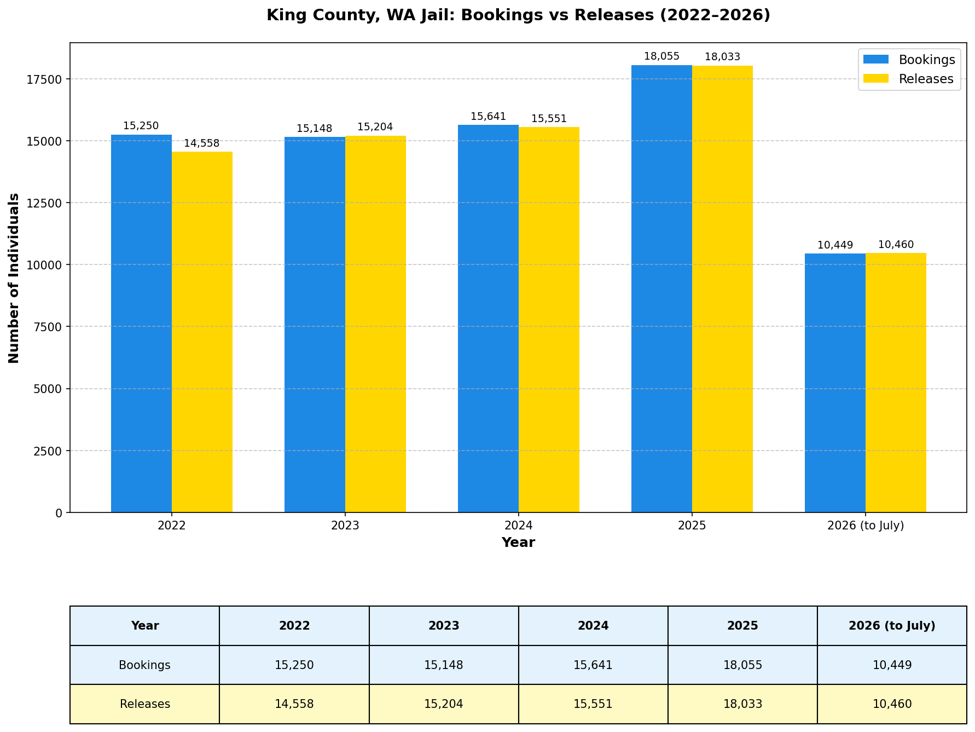
At no time during the hearing did any of the proponents of the change identity an actual quantifiable problem in Washington State. They just continued to spout their overused, never-ending argument that people are languishing away in jail because they cannot afford a bail bond. And when people are locked up in jail, it negatively impacts their life. The interesting thing about these claims in this instance is that the proponents, the bail profession, came with the data. Not Vermont data or Colorado data. They came with actual Washington data that showed the last five years of bookings and releases in King County, the largest county in Washington. And guess what? The data didn’t align with the proponent’s argument. According to actual data from King County Courts, the number of bookings over the last 5 years is almost identical to the number of releases for those 5 years. In other words, the data shows that everyone getting booked is being released. There are no people languishing away in jail. So once again, what is the problem they are trying to solve?
The truth is that there is no problem with Washington’s pretrial system. Proponents of the rule changes just want the rules to disenfranchise secured bail in favor of their preferred method of release. That is not reform, that is just a means to and end for these people…an end to secured bail. It doesn’t keep people safer; it is purely arbitrary and selective rulemaking to benefit your own interests.
Washington judges already have a range of release tools available. Under the current rules they can order personal recognizance, unsecured bonds, a 10 percent deposit with the court, a surety bond, electronic monitoring, or other conditions. The judge’s job is to select the combination that, based on the facts of the individual case, is most likely to produce the defendant’s appearance. That is the essence of judicial discretion.
The proponents want to change that. It would create a “strong presumption” that the court must allow the defendant to post only 10 percent of the bail amount with the court clerk (refundable if the person appears…of course, minus court costs and fees which they never mention). In practical terms, the activists want to take the choice of release mechanism largely out of the judge’s hands and force their preferred method, court-administered 10 percent deposit, as the default.
Proponents claim this will not harm appearance rates. In fact, they site several studies that their own related groups have performed that all says that releasing people on unsecured bonds is just as effective as releasing people on their own recognizance. The national data tells a different story.
The largest multi-year study of felony defendants in the nation’s 75 largest counties, conducted by Bureau of Justice Statistics researchers Thomas Cohen and Brian Reaves (covering 1990–2004), found that defendants released on commercial surety bonds had the lowest failure-to-appear rate of any major release type: 18 percent. Deposit bonds produced an FTA rate of 22%. Unsecured bonds and release on recognizance produced substantially higher rates (roughly 26–30 percent range depending on the comparison). After statistical controls, surety bonds still showed the lowest predicted probability of failure to appear. Additionally, only 3% of defendants released on surety bonds remained fugitives after a year compared to over 7% for those released on a Deposit bond. Based on those facts, why did the proponents claim that deposit bonds were just as effective as surety? Clearly the data shows they are less effective.
Economists Eric Helland and Alexander Tabarrok reached a similar conclusion in their 2004 study published in the Journal of Law & Economics. Using matching techniques to compare otherwise similar defendants, they found that those released on surety bonds were 28 percent less likely to fail to appear than defendants released on their own recognizance. When defendants did fail to appear, those on surety bonds were 53 percent less likely to remain at large for extended periods. The overall probability of becoming a long-term fugitive was dramatically lower under the surety system.
These findings are consistent across multiple studies that examine real-world outcomes rather than theoretical preferences. Secured surety release creates a private incentive structure, someone with a financial stake who monitors the defendant and has resources to locate them if they abscond, that pure court deposits and unsecured release do not replicate.
None of this means every defendant needs a surety bond. Many lower-risk cases are appropriately handled with recognizance or other non-financial conditions. Washington has a pretrial services group that is responsible for handling those types of defendants. Why is no one questioning that group?
The point is that judges currently have the authority to match the tool to the risk. The proposed rule would systematically constrain that authority in favor of one method preferred by the sponsors, regardless of the individual facts or the evidence on comparative effectiveness.
If the Court adopts the changes, it will not be because the data show that 10 percent court deposits outperform secured release. It will be because the rule-making process has elevated a policy preference over the practical judgment of the judges who sit in the courtrooms every day and are responsible for both appearance and public safety. That type of outcome would lead to the death of judicial discretion.