The Bail Project: Do They Really Even Know Who is Actually in Jail or Are They Just Making Their Story Up?
In his pointed critique, Mike Morrison, a 35-year veteran of the surety bail industry dismantles The Bail Project’s recent article claiming that most people in jail are not dangerous.
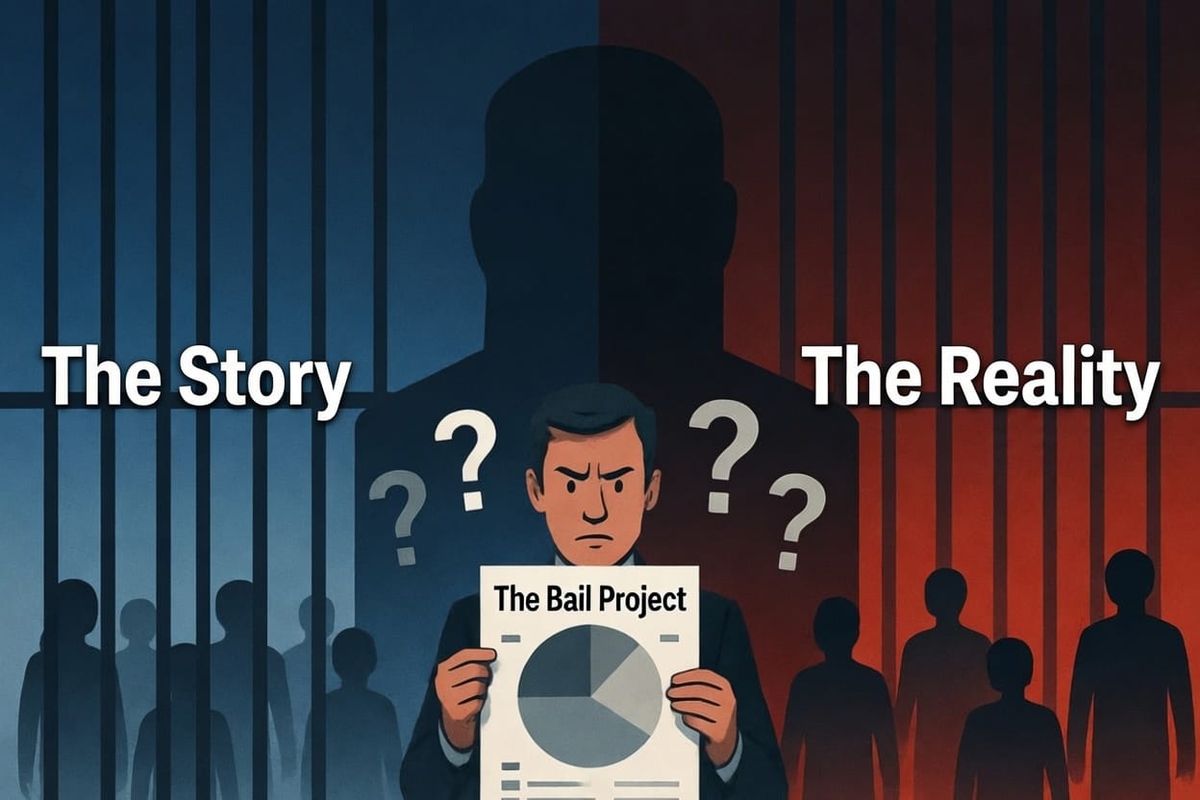
In his pointed critique, Mike Morrison, a 35-year veteran of the surety bail industry dismantles The Bail Project’s recent article claiming that most people in jail are not dangerous. Morrison argues that The Bail Project relies on a classic statistical shell game: it counts jail admissions (the flow of people entering jail) rather than the population actually held on any given night (the stock). Because low-level offenders cycle in and out quickly while those charged with serious crimes remain for months, admission statistics make the jail population appear far more harmless than it actually is. Using The Bail Project’s own data sources, Morrison notes that violent charges form the largest category among the pretrial detained population, the group that bail policy actually affects.
The piece further challenges the article’s treatment of “non-violent” offenses. Categories such as public order, drug possession, and property crimes are presented as largely victimless, yet they include DUI deaths, illegal weapons, repeated shoplifting that closes family businesses, burglaries that destroy a sense of safety, fraud that targets the elderly, and protection-order violations that often precede domestic homicide. Failure to appear is likewise minimized as a paperwork problem, when in reality it forces victims to return to court repeatedly and delays justice. Morrison contrasts this with commercial surety bail, where agents are financially accountable for returning defendants, versus charitable bail funds that bear no such risk.
Ultimately, the article concludes that The Bail Project’s recurring “myth-busting” pieces serve a fundraising purpose more than a public-policy one. By painting jails as warehouses of the poor and unlucky rather than places holding people who have repeatedly harmed their communities, the organization generates donations from distant supporters. Local residents, however, see the same names cycling through the system and understand why jails exist. No amount of carefully framed statistics, the author argues, will convince communities that have lived with the consequences that “some people do belong in jail.” An excerpt from the article is below as well as a link to the original article.
Most People in Jail are there for Exactly What you Think
By Mike Morrison
The Bail Project’s latest "myth-busting" only works if you never ask who got hurt — and never look at who’s actually in the jail tonight.
On June 25, The Bail Project published another article designed to make America doubt its own eyes. The headline: "Most People in Jail Aren’t There for What You Think." The thesis: your county jail isn’t holding dangerous people. It’s holding the poor, the unlucky, and the unwell — victims of a system that confuses instability with crime.
I’ve spent 35 years in the surety bail profession. I’ve stood in jail lobbies at two in the morning. I know the names on the roster, and I know the names of the people they hurt. So, let me walk through what this article actually does, piece by piece — and then let me ask The Bail Project a question they never answer: what exactly do you accomplish by publishing this?