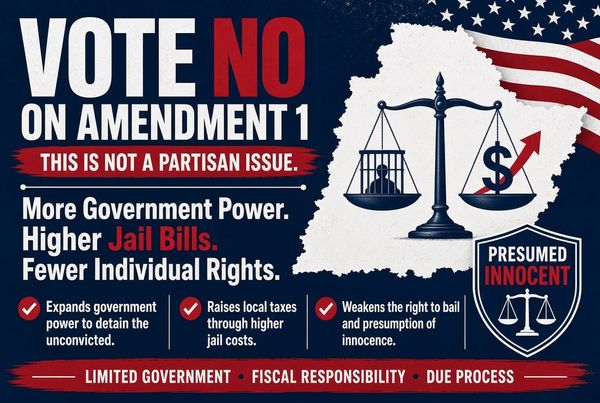
Apple Chooses Ideology Over Public Information
Apple has now joined the growing list of major technology platforms that are actively restricting public access to information about legitimate bail bond services

Apple Maps Bans Bail Bond Ads — Another Platform That Chooses Ideology Over Information
In a recent article entitled, "Apple Maps Ads Ban Home Services, Crypto ATMs, Bail Bonds," posted on the Search Engine Journal website, it was announced that Apple has now joined the growing list of major technology platforms that are actively restricting public access to information about legitimate bail bond services. In newly published advertising policies for Apple Maps Ads, set to roll out this summer in the U.S. and Canada, Apple explicitly prohibits advertisements for bail bonds, along with a broad category of home services (plumbing, electrical, locksmith, HVAC, pest control, roofing, and general contracting) and cryptocurrency ATMs.
The policy, which took effect on July 14, 2026, means that when a consumer searches Apple Maps for help securing a loved one’s release from jail, they will not see paid listings from licensed bail agents. Apple has offered no public explanation for why a constitutionally recognized and state-regulated profession is being treated the same as crypto ATMs. The company simply removed the category from its initial advertiser pool.
This is not an isolated decision. It follows years of similar restrictions by Google, which has long limited or banned bail bond advertising across Search and Maps, and has imposed heavy verification hurdles or outright prohibitions in many jurisdictions. Other platforms have followed suit under pressure from advocacy groups that portray commercial bail as inherently predatory. The result is a coordinated effort by some of the world’s largest information companies to make it harder for ordinary people to find a lawful, time-sensitive service when they need it most.
These restrictions are deeply misguided. Bail is not a fringe or optional part of the American criminal justice system. It is a foundational mechanism designed to balance individual liberty with the need for defendants to appear in court and for communities to remain safe. When a person is arrested, a financially secured surety bond often provides the only realistic path to pretrial release for those who cannot post the full cash amount. Licensed bail agents verify information, maintain contact with defendants and their families, notify them of court dates, and, when necessary, locate and return those who fail to appear. Decades of research, including landmark studies from the Bureau of Justice Statistics and multiple large-scale county analyses, have shown that financially secured release produces meaningfully higher court appearance rates and better fugitive recovery than unsecured alternatives.
By preventing consumers from easily finding these services, Apple and Google are not protecting the public. They are inserting themselves between citizens and a critical component of the justice system. A family who's relative has just been arrested does not have the luxury of time. They need accurate, timely information about licensed professionals who can help. Removing that information from the maps and search results ads people rely on does not make the system fairer — it makes it less transparent and more difficult to navigate.
Apple’s own marketing language emphasizes that Maps exists to help people “decide where to go” and take action. Google’s mission is famously to “organize the world’s information and make it universally accessible and useful.” Both companies repeatedly claim they exist to serve users by providing the best available information. Yet when it comes to bail bonds, they have chosen to withhold information about a lawful, regulated industry that millions of Americans depend on every year. That choice is not neutral. It is a form of viewpoint discrimination that treats one segment of the criminal justice system as illegitimate while leaving other, far more controversial categories intact.
The practical consequence is clear. Families in crisis will face higher barriers to securing release. Defendants who might otherwise be released under supervision may remain in jail longer. And the public will have less access to a system that has, for generations, helped courts function by ensuring appearance without requiring taxpayers to fund the full cost of pretrial supervision.
Technology companies are free to set advertising policies. What they are not free to do is claim the moral high ground of information access while selectively blocking information about a core constitutional process. Bail is not a luxury service. It is part of how the American justice system has operated for centuries. Platforms that pride themselves on connecting people with the information they need should not be in the business of deciding which parts of the justice system the public is allowed to see.