Bail Reform's Expensive Promise of "Fairness"

Why Financially Secured Surety Bonds Are Cheaper and More Effective
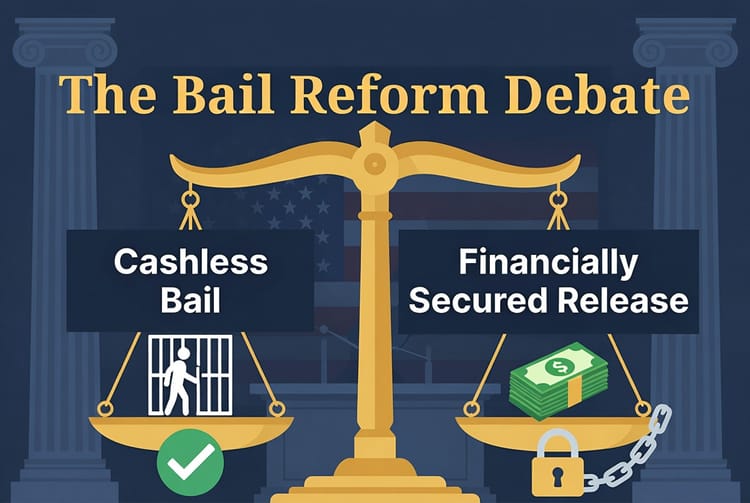
In the ongoing debate surrounding bail reform and pretrial release, many jurisdictions have shifted away from traditional financially secured bail bonds toward court-supervised pretrial release programs that emphasize “fairness” by removing cash bail requirements. Proponents argue that a defendant’s pretrial freedom should depend solely on public safety risk rather than ability to pay. In his recent article, past President of the Professional Bail Agents of Idaho and owner of A-Affordable Bail Bonds, Rulon Evans, writes how the bail reform narrative of "fairness" might just be the most expensive solution available. According to Mr. Evans, data from these bail reform initiatives shows that pretrial release and monitoring services often transfer financial burdens from professional bail agents to defendants, families, and taxpayers. Court-mandated electronic monitoring, frequent check-ins, and drug testing create ongoing costs that can exceed those of traditional bail, all imposed before any conviction.
Professional bail bonds, still the standard in most U.S. states, provide a more predictable and lower-cost path under bail reform alternatives. A judge sets bail based on offense severity, flight risk, and criminal history; a licensed bondsman then posts the full amount for a non-refundable 10% premium—typically payable in installments—with family or friends acting as indemnitors to encourage court compliance. In contrast, pretrial release programs frequently impose daily GPS ankle bracelet fees of $5–$40 plus activation and administrative charges, quickly totaling $150–$1,200 in the first month and over $5,000 during a six-month trial. These pretrial release costs are never refunded—even upon acquittal—and unpaid monitoring fees can result in re-incarceration solely for poverty, not new crimes. Ultimately, professional bail allows defendants to maintain normal life with minimal restrictions, truly upholding “innocent until proven guilty” while keeping overall expenses far lower than court pretrial release and monitoring. Below is an excerpt from Mr. Evans' article as well as a link to the full article.
Professional Bail vs. Court Pretrial and Monitoring
By Rulon Evans
The claim from bail reform is "fairness": they say that a person's freedom before trial depends on their risk to public safety, not their ability to pay a cash amount. Data shows that in many places, court pretrial release "pretrial services" has increased financial burdens; it has moved the cost from the professional Bail Agent to others, often at taxpayers' expense, with costly results for the defendants. READ THE FULL ARTICLE HERE>>>




Member discussion