Bail Reform and Pretrial Release: Why Serious Crimes Demand Financially Secured Bonds — Not Cashless Bail
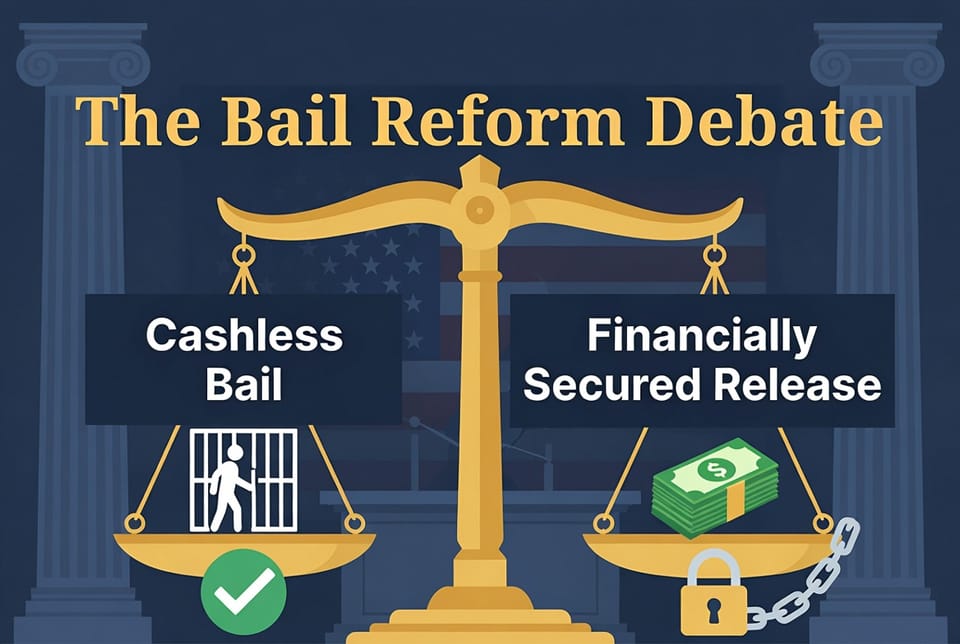
In the heated bail reform debate on the topic of pretrial release, the recent article “Bail That Fits the Case: Why Serious Crimes Demand Serious Bond Consideration” the author, Cary Carlisle, President of the Florida Bail Agents Association, makes a compelling case that bail must be individualized rather than automatically low or eliminated. While bail is never intended as punishment, Mr. Carlisle’s piece argues that serious offenses—whether violent or non-violent—require bond amounts that truly reflect the crime’s severity, the defendant’s flight risk, and the need to protect the crime victim and overall public safety. It directly challenges one-size-fits-all cashless bail approaches by insisting that pretrial release decisions cannot ignore the real-world stakes involved in major financial crimes, large-scale drug operations, or other high-impact felonies.
Effective pretrial release hinges on a thorough evaluation of multiple factors, including the seriousness of the charge, prior criminal record, history of court appearances, community ties, employment, and overall risk to the public. Mr. Carlisle stresses that even defendants with clean records or no history of violence can pose substantial incentives to flee or reoffend when the alleged crime carries massive economic or systemic consequences. By matching bond amounts to the case rather than defaulting to cashless bail or minimal conditions, courts uphold the presumption of innocence while still creating meaningful accountability—preventing low bonds from undermining the judicial process or eroding public trust.
Ultimately, the article calls for balanced bail reform that respects both the rights of the accused and the safety of the community. When pretrial release decisions thoughtfully incorporate the gravity of serious charges alongside personal circumstances, the system functions as intended: ensuring appearances, deterring flight, and safeguarding victims without turning bail into punishment. This measured approach stands in contrast to overly lenient cashless bail policies that may fail to address the unique risks of high-stakes cases.
Below is an excerpt from Mr. Carlisle’s article as well as a link to the full article.
Bail That Fits the Case: Why Serious Crimes Demand Serious Bond Consideration
By Cary Carlisle
In the ongoing discussion about bail reform, one principle must stay clear: bail isn't meant to punish. Its goal is to ensure defendants appear in court while upholding the presumption of innocence. However, that doesn't mean bond amounts should be kept low in every case. When serious crimes are involved, bond amounts need to accurately reflect the severity of the offense, the risk to the public…READ THE FULL ARTICLE HERE>>>





Member discussion